
Running a Sex Offender Check in Wright County
The Iowa Sex Offender Registry is the main public channel for a Wright County check. The Iowa Department of Public Safety Division of Criminal Investigation manages the statewide data. Search by name when you know the person, or narrow by Wright County, city, ZIP code, address, or map when the question is tied to a place. Results can include active status and a route to most-wanted information.
The Wright County Sheriff's Office is the local registration and verification office. It does not replace the state portal with a separate public county list. Use the registry profile for public Iowa data, then contact the sheriff when an address appears wrong or suspected noncompliance needs to be reported. For a person who may have moved across state lines, add the national search rather than relying on one county filter.
Wright County Registry Redesign
DCI launched a redesigned registry on August 22, 2025. The change added broader search functions, helpful tips, direct paths for active and most-wanted registrants, and interactive maps with counts for selected areas. Older screen captures and instructions may point to controls that no longer match the live service.
The official redesign announcement records that milestone.
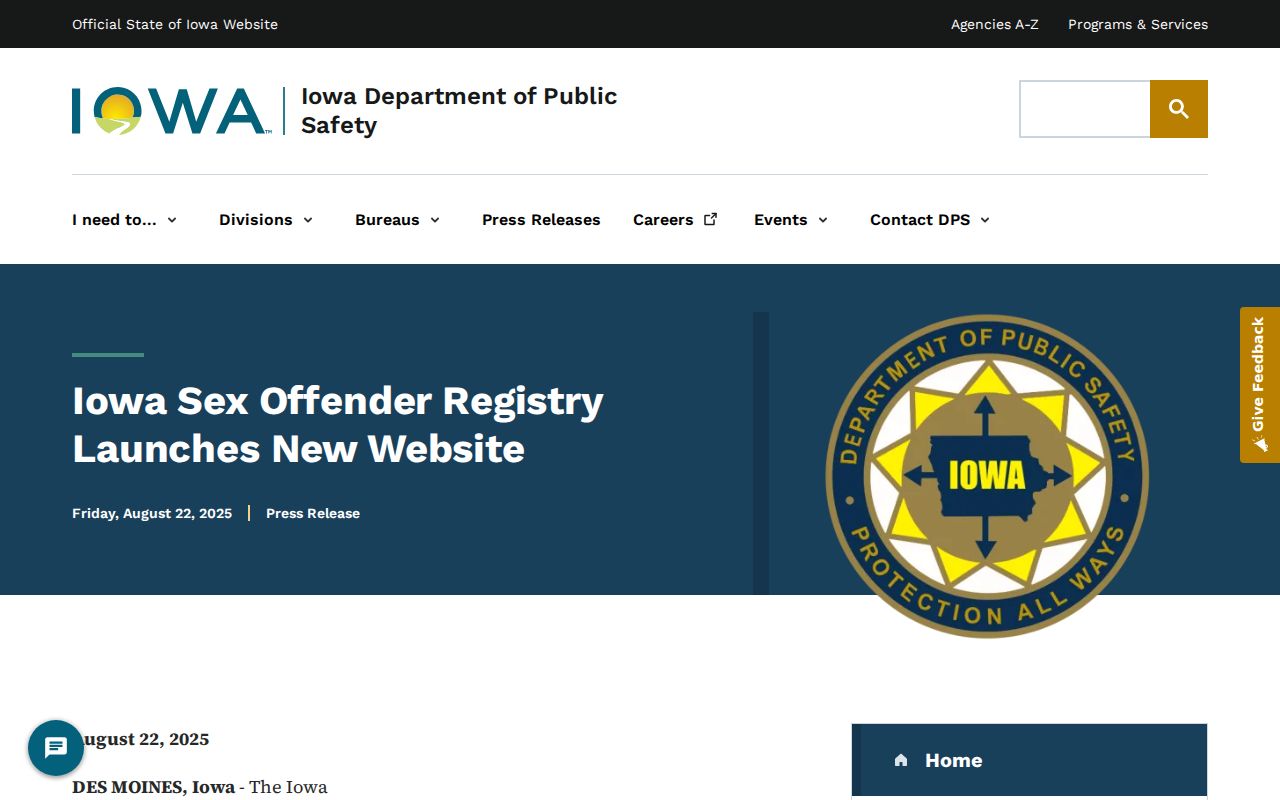
The new search and map tools make place-based Wright County checks easier, but a map count is not an individual risk score.
Searching the Iowa Sex Offender Registry
Use only enough search detail to distinguish likely matches. A name route works for a known person. A place route is better for community awareness near a Wright County address. City searches can use Clarion, Eagle Grove, or Belmond. The map and list are two views of the same public system, and the most-wanted path is not a list of every registrant in Wright County.
- Open the Iowa registry and review its current terms, tips, and search choices.
- Enter a name, or narrow by Wright County, city, ZIP code, address, or map location.
- Compare the result list by photo, identifiers, status, and registered place. Do not rely on the name alone.
- Open the official profile and read its tier, offense, locations, compliance information, and update date together.
The current registry supports these public controls.
| Field or Control | Type | Required | Use |
|---|---|---|---|
| Name | Text | No | Search active registrants by name. |
| City and ZIP Code | Place filters | No | Narrow to a Wright County community or postal area. |
| County | Dropdown | No | Select Wright County. |
| Address or Location | Text/map | No | Explore proximity where the live tool offers it. |
| Map or List | Display control | No | Switch how results and area counts are shown. |
| Active or Most Wanted | Links/filters | No | Use the correct status path. |
The official Iowa registry shows the live starting point.
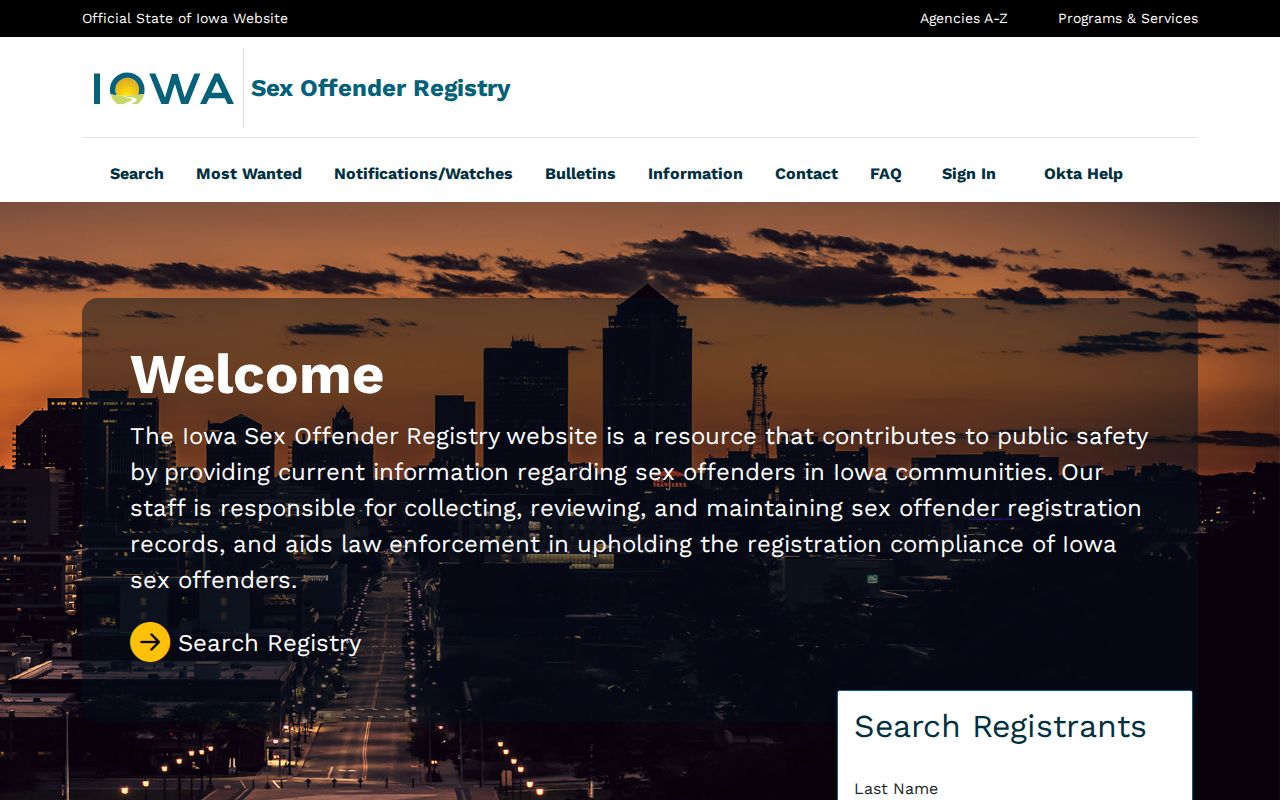
Use the live controls because the state may refine labels after the 2025 redesign.
Wright County Offender Registration Office
The Wright County Sheriff's Office contact page identifies the local registration and verification office at 719 Second Street SW, Clarion, Iowa 50525. The main phone is 515-532-3722. Call for check-in or appointment instructions. A registrant reports to the sheriff of each county of residence and, when applicable, work, school, or vocation. Changes and temporary lodging can trigger short reporting periods under Iowa law.
Report an address concern or suspected failure to comply to law enforcement. Do not visit the listed place or approach the registrant. DCI's registry contact is 515-725-6050 and sorinfo@dps.state.ia.us. The DPS contact page provides the state fallback.
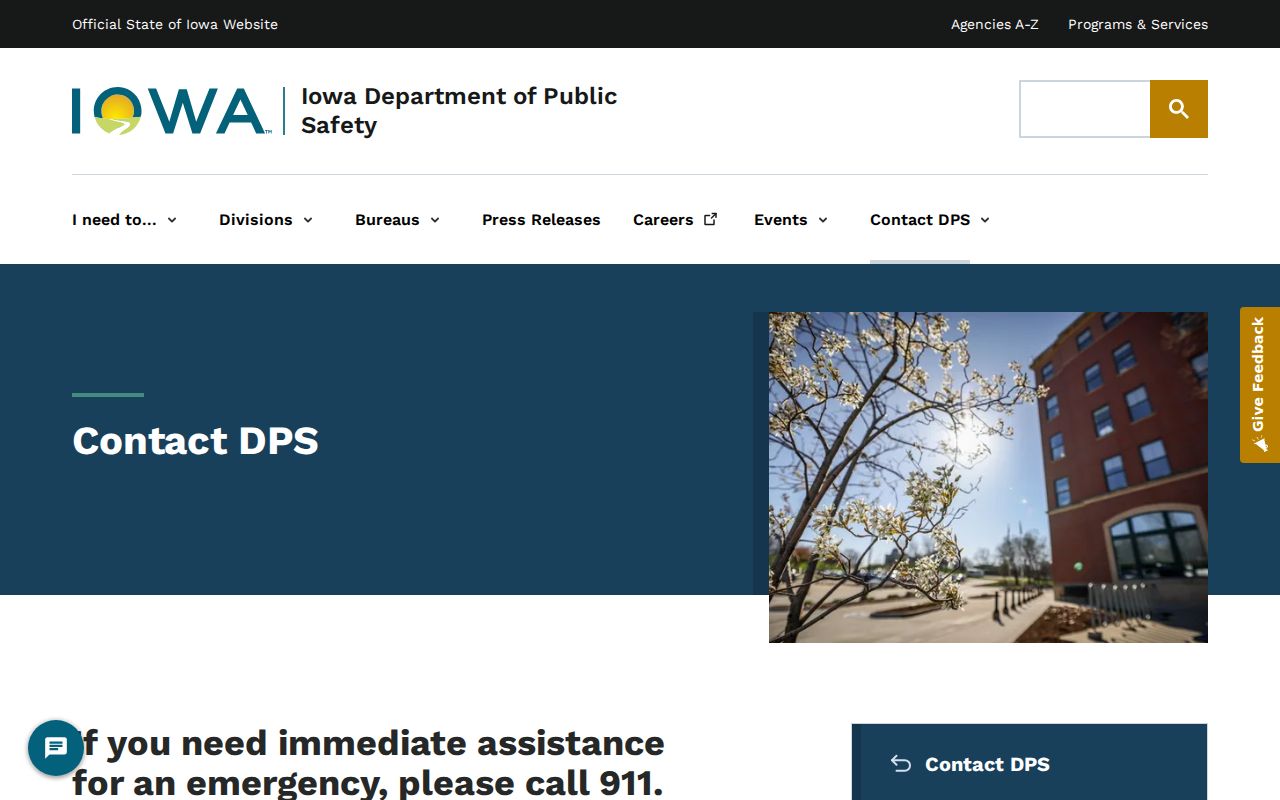
Those state contacts complement the Wright County sheriff's local reporting role.
What a Registry Profile Shows
A public Wright County registry profile is a statutory summary, not the full criminal case. Read the identity, registered location, qualifying offense, tier, status, reporting agency, and update date as one set. The profile may show more than one registered place when Iowa law makes it public. It can also show vehicle, school, vocation, scars, marks, or tattoos to the extent authorized.
| Name & Aliases | Public indexed name and aliases used to distinguish the person. |
|---|---|
| Photo & Physical Description | Current photo plus public sex, race, age or birth detail, height, weight, hair, eyes, and identifiers. |
| Registered Address | Residence or location at the public level, along with county, city, and other registered places when allowed. |
| Offense & Statute | Qualifying offense, jurisdiction, conviction date, and victim-age category when authorized. |
| Level / Tier | Iowa's offense-based tier and related registration framework. |
| Registration Status | Compliance or most-wanted information, reporting agency, and profile update date. |
The registry protects the victim's identity and does not publish the full police investigation or court file. For the filed charge and judgment, use the Wright County criminal court cases channel.
Wright County and National Searches
The National Sex Offender Public Website joins public data from participating jurisdictions. It is useful when a person may have ties outside Iowa or when a place-based check crosses a state line. Return to the Iowa profile for Iowa-specific fields, status language, tier rules, and the local reporting agency.
The official national search shows that cross-state layer.
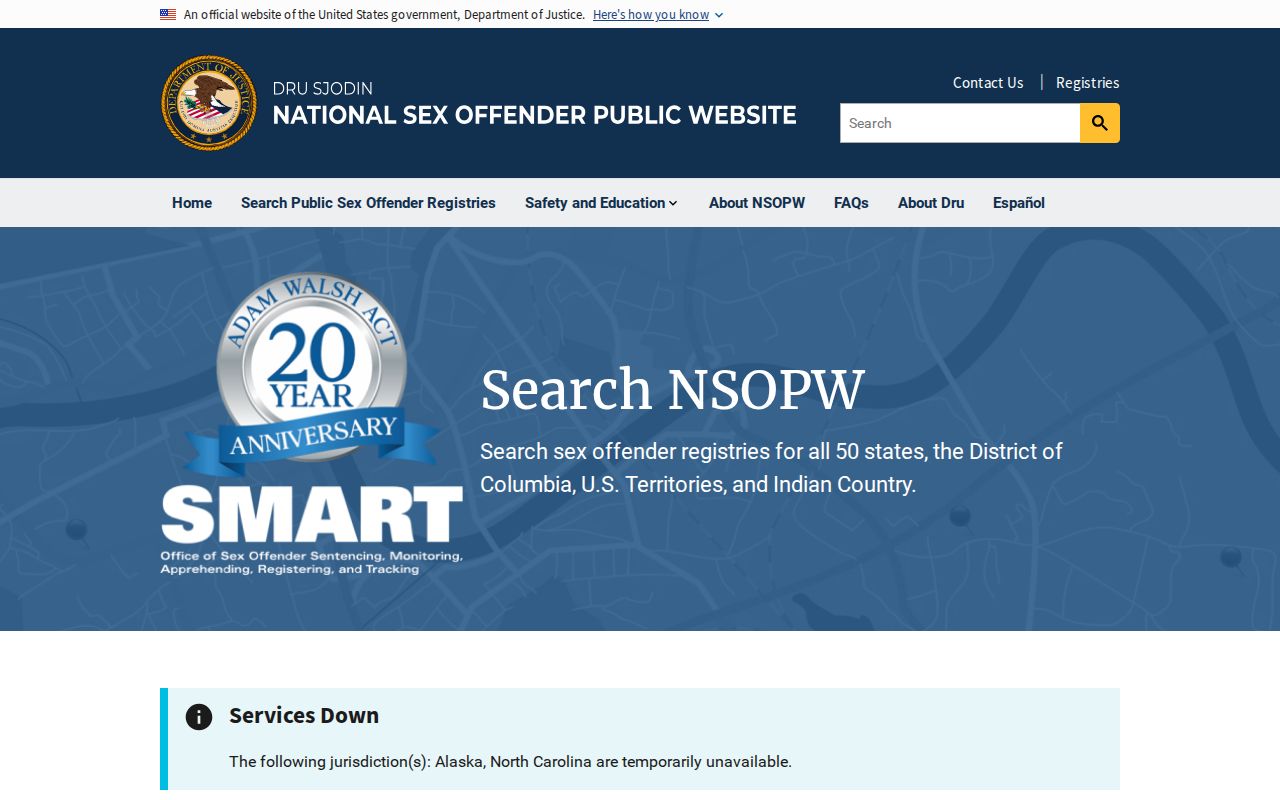
NSOPW expands geographic reach, while the Iowa registry remains the authoritative public source for a Wright County entry.
Registration Requirements and Levels in Iowa
Iowa classifies registrants by qualifying offense under Iowa Code section 692A.102. Do not substitute the familiar federal 15-year, 25-year, and life shorthand. Iowa Code section 692A.106 starts with a ten-year baseline and then applies extensions tied to a special sentence, revocation, repeat registration, aggravated offenses, qualifying prior offenses, registry-law convictions, and sexually violent predator status. Incarceration and noncompliance can toll the term.
| Iowa Tier | General Duration | In-Person Verification |
|---|---|---|
| Tier I | Baseline 10 years; statutory extensions may apply | Annually |
| Tier II | Baseline 10 years; statutory extensions may apply | Every six months |
| Tier III | Baseline 10 years; many rules can extend it, sometimes to life | Every three months |
Section 692A.128 creates a court modification process for qualifying registrants. It is not automatic. The current chapter 692A text contains the controlling rules.
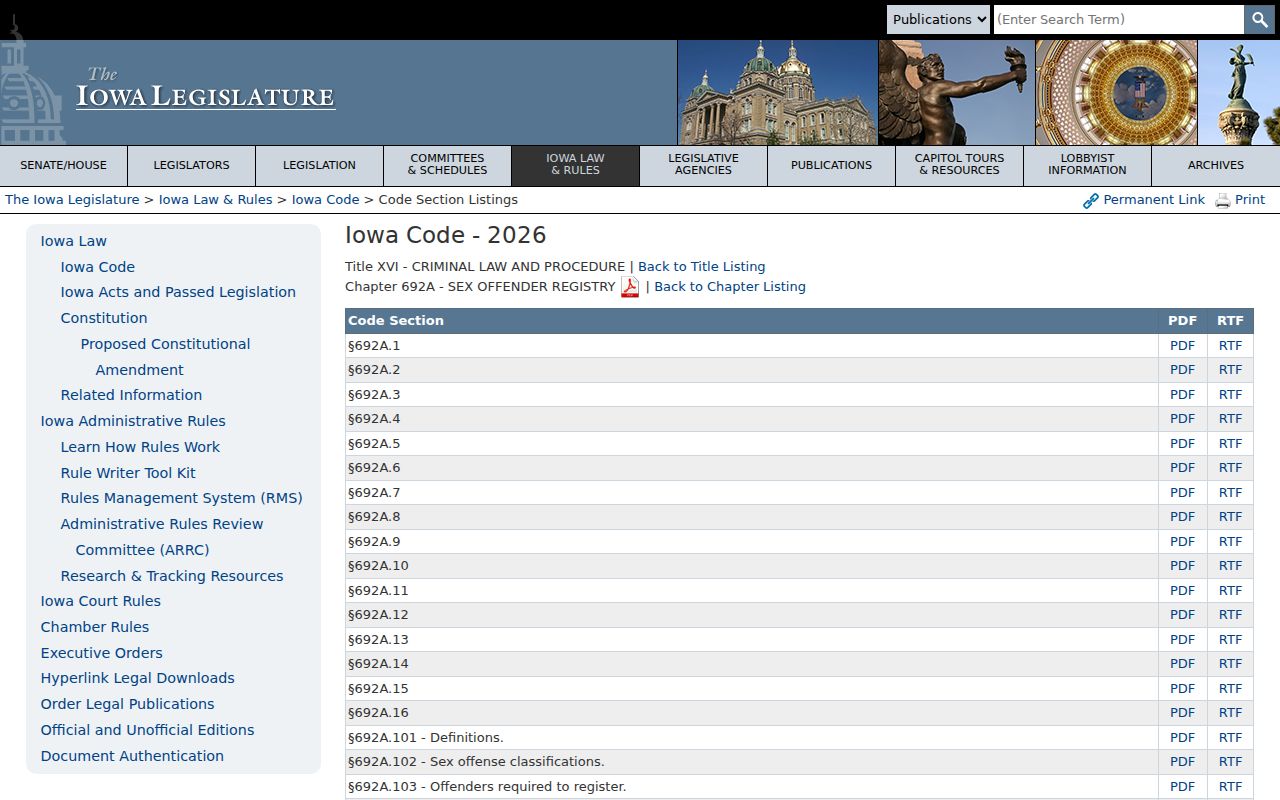
The statute explains why tier alone cannot predict the end date of every Wright County registration duty.
Wright County Offender Location Rules
Iowa Code section 692A.114 contains school and child-care residence and presence rules for covered offenders. It includes a 2,000-foot restriction and statutory exceptions. Not every registrant is covered in the same way, and the map should not be used to invent a prohibited zone. The offense, statutory category, location, and exception all matter.
Interactive map counts also need care. A dot or count shows public registry data for the selected view. It does not score risk, forecast conduct, or prove that a person is at that spot at the time of the search. Check the profile's location type and update date, then contact the Wright County sheriff about an apparent error.
The DCI Support Operations page identifies the state unit behind registry and record functions.
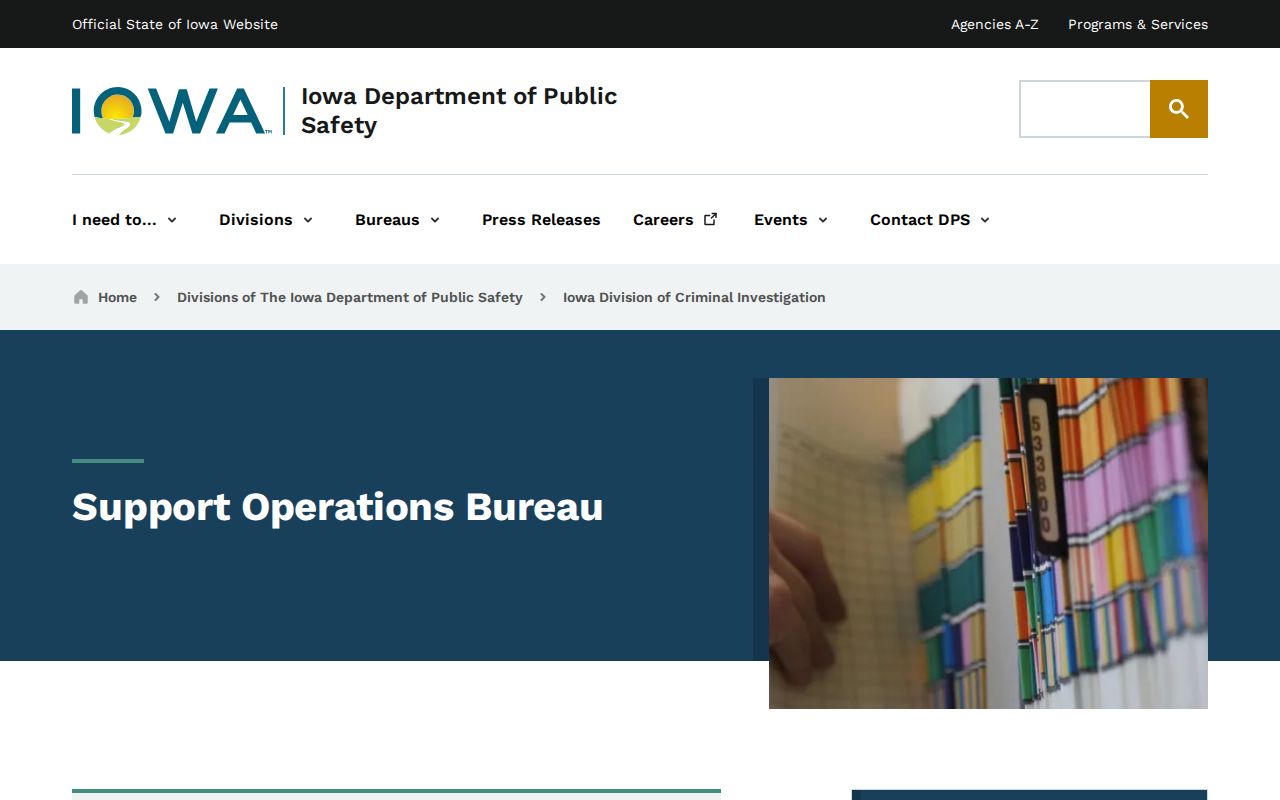
That state role explains why corrections to the public system involve DCI as well as local verification.
Lawful Use and Community Notification
Registry information is meant for informed personal, family, and community safety. Use it to understand public facts, plan a calm safety response, and give law enforcement a specific concern. Do not confront a registrant, enter private property, circulate a claim beyond what the official profile says, or treat an area count as proof about one person. Report suspected noncompliance to the Wright County sheriff.
Misuse is unlawful: Using registry information to threaten, stalk, harass, trespass, intimidate, or commit another crime is a crime under applicable Iowa law. Iowa Code chapter 692A governs the public registry and its lawful safety purpose.
Most-wanted status is also narrower than many readers assume. It points to people sought for a registry issue; it is not the full Wright County list. Confirm status on the official profile and pass concerns to law enforcement. The state registry's public fields can change as a person reports new information, so note the update date before acting on a result.
Correcting a Wright County Registry Concern
If a Wright County address appears wrong, save the official profile URL and note the field, status, and update date. The county office directory routes residents to the sheriff, or call 515-532-3722 for local verification or suspected noncompliance. For a state data issue, contact DCI at 515-725-6050 or sorinfo@dps.state.ia.us. Give a clear factual description without posting private claims online.
The safest next step is a report, not a confrontation. Registration data can lag a reported change, show a type of location that is easy to misread, or reflect a legal exception. Law enforcement and DCI can compare the public display with the registration record. A private person cannot make that determination from a map alone.
Include only facts that help staff check the record, such as the profile link, listed location, date viewed, and the part that seems inconsistent. Do not collect information by following someone or entering private land. The sheriff can determine whether the concern involves an unreported change, a display issue, or no violation. DCI can address the statewide profile when the local registration facts and public screen do not match.
Recheck the official profile after reporting the concern. An update may change the address, status, reporting agency, or profile date. Keep in mind that a public location can be described at the level Iowa law permits, not at the level a searcher expects. A registry entry also remains distinct from the court judgment that created the qualifying duty. The public screen should not be expanded with rumor or an unofficial list.